Mom Hair Don't Care: A Designer's Embroidery Review
As someone who has spent years navigating the fine line between a cute digital file and a professional finished product, I approach every new design with a critical eye. The phrase Mom Hair Don't Care is currently trending across social media and craft platforms, but does it translate well from a screen to a stitch? When evaluating an embroidery design for real project use, we must look beyond the vector lines and imagine how thread will behave on fabric. This review breaks down my practical assessment of this specific graphic, focusing on its viability for custom apparel, handmade gifts, and commercial embroidery projects.
The Visual Mood and Design Personality
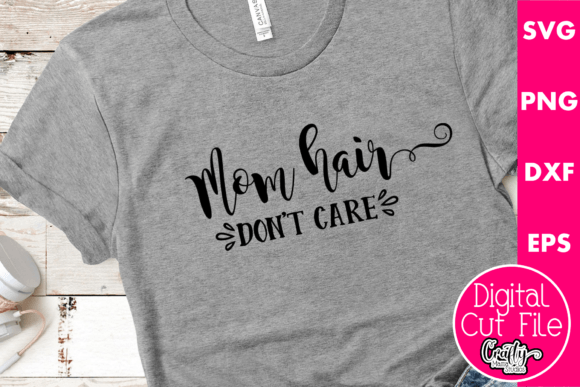
At first glance, the Mom Hair Don't Care design exudes a relatable, humorous confidence that resonates deeply with modern parents. The typography is bold and slightly playful, avoiding overly ornate flourishes that can get lost in stitching. For an embroidery designer, this is a crucial starting point. Designs that rely on tiny serifs or intricate inner details often struggle when converted into a machine embroidery design due to stitch density issues. Here, the layout feels robust. The spacing between letters appears generous enough to prevent thread bunching, which is a common pitfall in quote-based graphics.
The visual personality suggests a casual, "lived-in" aesthetic rather than a formal boutique look. This makes it an ideal candidate for everyday wearables like sweatshirts, tote bags, and aprons. It captures the chaotic charm of motherhood without trying too hard to be polished. However, because it is a text-heavy graphic, the success of the final piece relies heavily on font weight and the quality of the fill stitch. If the original SVG was cut tested on a Titan 3 cutter, as the description notes, it implies clean edges, but cutting machines do not always predict how a needle will pull thread through layers of fabric.
Real-World Application: From File to Fabric
Let's imagine a real-life scenario where I am preparing a batch of personalized gifts for Mother's Day. I have a client requesting custom embroidered tote bags featuring this phrase. My first step is to visualize the hoop size. For a standard tote bag, I would likely need a medium-sized hoop to accommodate the full width of the text without distorting the aspect ratio. If the design is too wide for the hoop, the fabric might pucker, ruining the professional finish of the handmade product.
In terms of application, this design shines on textured fabrics like canvas or heavy cotton blends found in tote bags and aprons. The texture helps hide minor imperfections in the satin stitch or running stitch that might occur along the letter edges. Conversely, placing this on a thin, stretchy t-shirt requires extra caution. Without the right stabilizer, the tension of the embroidery could cause the fabric to warp, making the text look wavy. For T-Shirt Designs specifically, I would recommend using a tear-away or cut-away stabilizer to support the stitch density, ensuring the letters remain crisp and legible after washing.
I also see potential for this as an embroidered patch. Creating a patch version of Mom Hair Don't Care allows for greater flexibility in placement. You can sew it onto denim jackets, backpacks, or even baby clothes as a fun statement. However, if you are creating a patch, ensure the border stitch is secure. A messy edge on a patch immediately lowers the perceived value of the item, which is critical for Etsy sellers and small shop owners looking to build brand trust.
Navigating Challenges: Where Caution is Needed
While the concept is strong, there are specific areas where this design requires careful handling. First, consider the fabric color. If you are embroidering this on dark fabric, the contrast becomes your best friend. Light thread colors against a black background will make the text pop, but you must check the stitch count. Darker threads often require higher stitch density to look solid, which increases the risk of puckering on lighter fabrics. Always test the design on scrap fabric first to gauge how the thread colors interact with the material.
Another challenge lies in curved surfaces. If you decide to place this design on a cap, the curvature of the brim or crown can distort the straight lines of the text. Embroidery machines struggle to maintain consistent tension on rounded objects. Unless you have a specialized cap frame, I would advise against using this specific text-heavy graphic on hats unless you are willing to resize it significantly. Similarly, avoid using this design on items that undergo frequent industrial washing, such as restaurant aprons, unless the stitch density is high enough to withstand abrasion.
Small details are another potential weak point. While the main text looks good, any decorative elements included in the Mom Hair Don't Care package—such as hair strands or sparkles—must be inspected closely. Tiny details often turn into blobs of thread if the digitizing isn't precise. Before committing to a commercial run, inspect the design in black and white mockups to identify any areas where stitches might overlap too densely or leave gaps.
Professional Considerations for Craft Businesses
For the creative entrepreneur or digital product seller, understanding the licensing and technical specs is just as important as the visual appeal. The product description mentions that the files are cut tested, which is excellent for vinyl users, but it does not explicitly confirm the stitch count or the specific digitizing quality for embroidery. As a rule of thumb, never assume a vector file is ready for embroidery without checking the stitch data. If you are selling finished products, you need to know exactly how long the machine will take to stitch each unit to calculate your labor costs accurately.
When integrating Mom Hair Don't Care into your portfolio, think about consistency. Does this design fit the overall vibe of your shop? If your brand is known for elegant, floral nursery decor, this bold, humorous quote might feel out of place. However, for a shop focused on funny, relatable gifts for moms, it is a perfect addition. It enhances buyer engagement by tapping into a shared experience. Customers are more likely to purchase a handmade product that makes them laugh or nod in recognition.
To maximize the value of this design, create printable mockups that show the design on various garments. Show it on a cozy sweatshirt, a sturdy tote bag, and a soft baby onesie. This versatility demonstrates to your customers that you understand how to adapt the design for different needs. Remember, the goal is not just to stitch words, but to create a memorable, high-quality finished product that stands up to daily wear.
Final Verdict: A Practical Choice for Makers
In conclusion, Mom Hair Don't Care is a promising asset for designers who understand the nuances of textile decoration. It offers a fun, marketable theme that works well on a variety of substrates, provided you respect the limitations of stitch density and fabric type. By testing on scrap fabric, choosing the correct stabilizer, and carefully selecting your thread colors, you can transform this digital file into a professional-grade embroidery project.
Whether you are an Etsy seller stocking up for the holiday season or a hobbyist creating a personalized gift for a friend, this design has the potential to deliver a smile. Just remember to verify the technical specifications before you start your machine. With proper preparation and attention to detail, this graphic can become a standout piece in your collection of custom apparel and handmade goods.