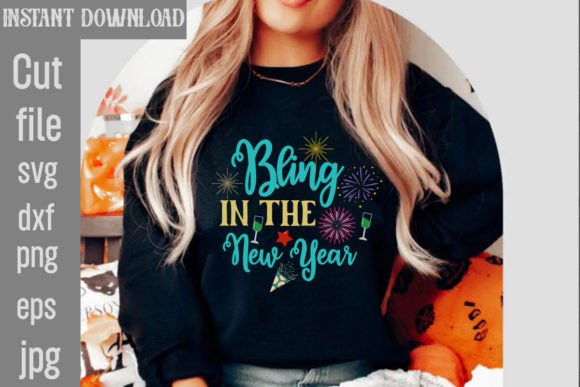
Bling in the New Year SVG: A Designer’s Take
As a designer who spends more time squinting at stitch previews than I do sleeping, I have learned to be skeptical of digital files that promise "instant glamour." We have all seen those overly complex designs that look stunning on a screen but turn into a tangled mess of thread breaks and puckering on actual fabric. So, when I pulled up Bling in the New Year SVG Cut File for evaluation, my primary question was not about the sparkle, but about the structural integrity. Does this design hold up under the needle, or is it just pretty pixels?
The first impression is one of celebratory confidence. The layout suggests a bold, festive mood, perfectly suited for the transition from holiday cozy to party-ready. Visually, the elements are balanced, avoiding the cluttered look that plagues many seasonal graphics. For those of us working in T-Shirt Designs and broader Graphics, this clarity is essential. However, translating a vector-based SVG into a tactile machine embroidery design requires a different mindset. I am not just looking at lines; I am looking at potential satin stitches, fill areas, and how the thread will interact with the fabric texture.
Real-World Application: The Tote Bag Test
To truly evaluate this file, I imagined a specific scenario: a custom order for a boutique client wanting ten personalized tote bags for a New Year’s Eve event. This is a common request for any Etsy seller or craft business owner. The canvas material of a tote bag is sturdy, which is good, but it has a visible weave. If the stitch density of the design is too low, the background fabric will show through, ruining the "bling" effect. If it is too high, the bag will pucker and become stiff.
In this context, Bling in the New Year SVG Cut File performs surprisingly well as a base for adaptation. While the product description notes it includes SVG, DXF, EPS, and PNG files—primarily intended for cutting machines like Cricut or Silhouette—an experienced embroiderer knows these vectors are invaluable for creating applique templates. I would use the SVG to cut a piece of metallic or glitter vinyl, then use a simple running stitch or narrow satin stitch to tack it down. This hybrid approach gives you the shine of "bling" without the risk of dense metallic thread breaking repeatedly. It transforms a standard tote bag design into a high-end handmade product that feels substantial and valuable.
Navigating Fabric and Hoop Constraints
One must be realistic about where this design fits. It is not a one-size-fits-all solution. For sweatshirt embroidery, the thick fleece provides a forgiving surface. The design’s bold lines would sit nicely on the chest or sleeve, creating a statement piece of custom apparel. However, caution is needed when moving to lighter materials. If you attempt this on a thin cotton tee or a silk scarf, the weight of the stitching could distort the garment. Always test on scrap fabric first. Check your hoop size constraints; while the vector can be scaled, scaling down too much will merge delicate details into an unreadable blob.
For baby embroidery projects, such as a onesie or a nursery blanket, I would advise simplifying the design further. Babies have sensitive skin, and heavy stitching or scratchy metallic threads can cause irritation. In this case, using the PNG file to print a heat-transfer vinyl version might be safer and more durable for frequent washing. The goal is to create a personalized gift that lasts, not just one that looks good for a photo.
Commercial Viability and Brand Consistency
For small shop product lines, consistency is key. When you sell a finished product, customers are buying into your brand’s aesthetic. Bling in the New Year SVG Cut File offers a versatile theme that can bridge the gap between casual craft and boutique quality. If you are selling embroidered patches, this design’s clear outlines make it easy to digitize into a clean, border-less patch that can be ironed onto jackets or hats. This adds value to your design assets library, allowing you to offer multiple product types from a single source file.
It is crucial to remember the licensing implications. Since this is a digital embroidery file package primarily marketed for cutters, you must verify if the creator allows commercial use of the derived embroidered items. Most designers do, but assuming so can lead to legal issues. Always read the terms. Assuming commercial use is permitted, this design can significantly boost buyer engagement during the holiday rush. It taps into the emotional desire for celebration and renewal, making it a strong contender for holiday embroidery collections.
Technical Notes for the Practical Designer
Before you load this into your machine or send it to a client, consider these practical steps:
- Contrast Check: View the design in black and white. If the details disappear, the stitch definition may be lost on dark fabrics.
- Stabilizer Selection: For stretchy fabrics like jersey knits used in t-shirts, use a cut-away stabilizer to prevent distortion over time.
- Thread Choice: If digitizing this yourself from the SVG, avoid using metallic thread for the entire fill. Use a high-sheen polyester for the main body and reserve metallics for accent lines to reduce breakage.
- Mockup Testing: Use the included transparent PNG to overlay the design on photos of your actual products. This helps visualize scale and placement before committing to stitching.
Ultimately, Bling in the New Year SVG Cut File is a tool. Its value depends entirely on how skillfully you wield it. It is not a magic button that produces perfect embroidery, but it is a solid foundation for creating memorable commercial embroidery pieces. Whether you are making a single personalized gift for a friend or stocking your online store with festive apparel decorators favorites, this design offers the flexibility and visual punch needed to stand out. Just remember to respect the material, check your tension, and let the design shine through thoughtful execution rather than relying solely on its digital promise.